The Famous Foods of Nabadwip
In Nabadwip, the food is just as much of a pilgrimage as the temples. The town’s flavors are built on generations of tradition, centered around pure vegetarian cooking and legendary sweets that have been perfected over centuries. If you’re visiting, come hungry—because the stories behind these dishes are as rich as the food itself. Nabadwip is a Paradise for Sweet Lovers. The town is dotted with iconic sweet shops like the 150-year-old Laxmi Narayan Confectionery or the bustling stalls near the Ferry Ghat.
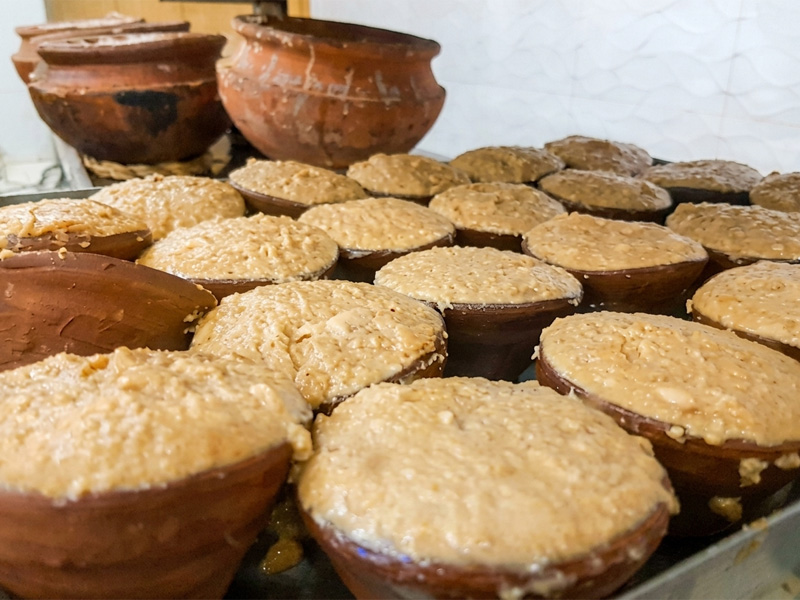
NABADWIP-er LAL DOI
You can’t talk about Nabadwip without mentioning its famous Lal Doi (Red Curd). Often called the “King of Yogurts,” this isn’t your average sweet curd. It was pioneered around 1930 by the legendary Kali Ghosh, who figured out that if you slow-boil milk over a wood fire for six hours, it naturally caramelizes into a deep, reddish-brown masterpiece.
Locals affectionately call it Chakku Doi (Knife Yogurt) because it’s so thick and creamy that you can actually slice it with a knife. It’s dense, smoky, and tastes like a piece of history in every spoonful.
KHEER DOI & KHEER MALAI
These are ultra-rich, thickened milk treats that define local celebrations.
You’ll find the gold standard of Bengali sweets here—Sandesh, Pantua, and Langcha—all made using recipes that have stayed exactly the same for decades.
Savory Comforts & Street Eats
Since Nabadwip is a holy town, the food is almost entirely vegetarian, but it’s anything but boring. For a real taste of a Bengali home, look for a vegetarian thali (the Traditional Thali). It’s usually a comforting spread of fluffy rice, dal, and seasonal specialties like Aloo Posto (potatoes in poppy seed paste) or the delicate Mochar Ghonto (a spiced banana flower stir-fry).
Morning & Evening Snacks
Start your day like a local with a plate of hot, puffed-up Luchi and Alur Dom. As the sun sets, follow your nose to the street stalls for spicy Ghugni (chickpea curry), crispy Telebhaja (fritters), or a quick round of tangy Puchka.
In Nabadwip, eating is a form of devotion. Whether you’re tucked into a simple plate of temple Bhog or savoring a bowl of caramelized curd by the river, you’re tasting the very heart of Bengal.