
Chaitanya Mahaprabhu
Chaitanya Mahaprabhu (1486 AD – 1534 AD) was a transformative spiritual leader, social reformer, and the central figure of the Gaudiya Vaishnava tradition.
Chaitanya Mahaprabhu birth place
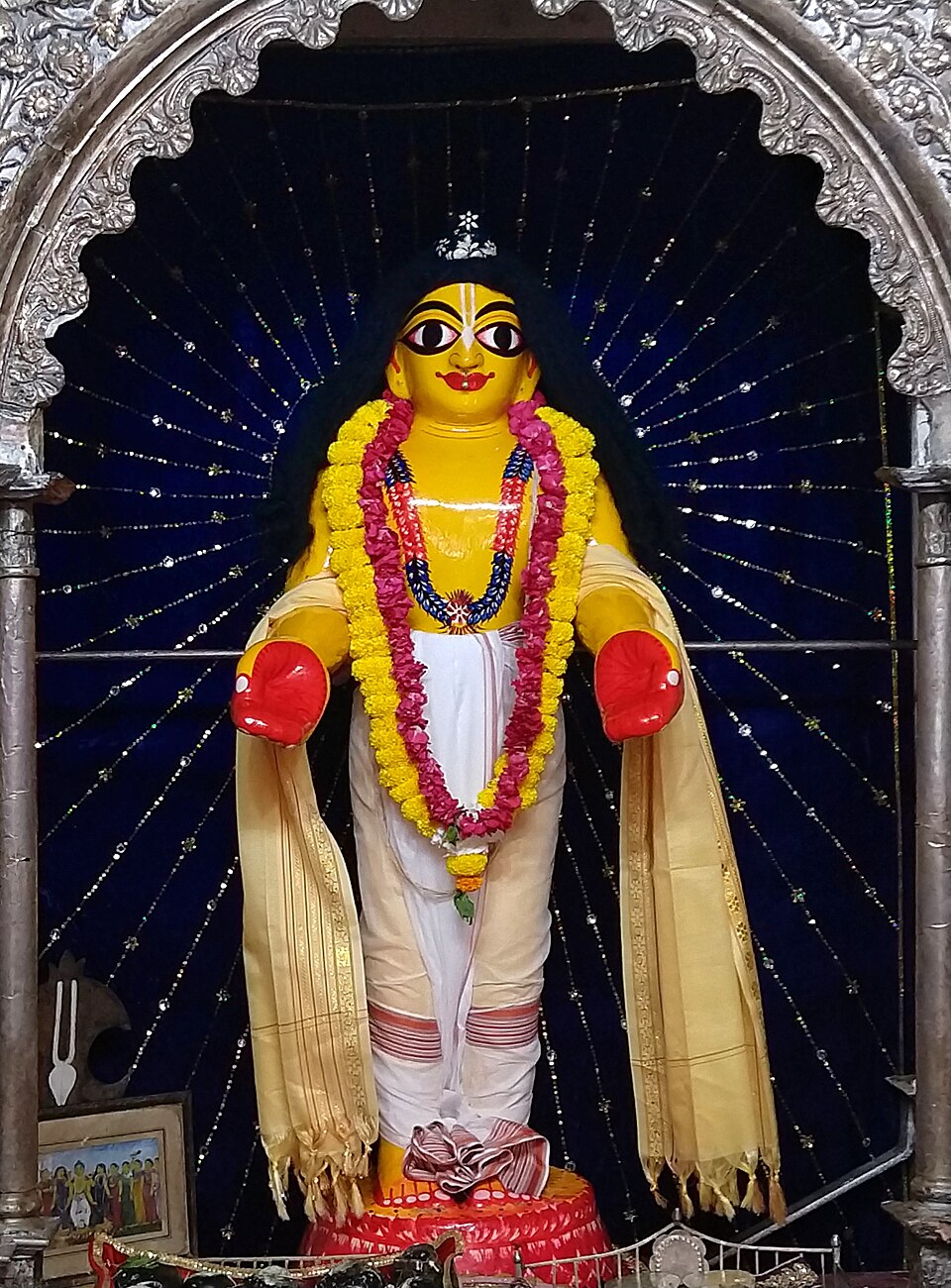
Born as Vishvambhara Mishra in Nabadwip, West Bengal, he is revered by millions as a joint incarnation of Radha and Krishna. His life and work ignited the Bhakti Movement in Eastern India, shifting the focus of spirituality from rigid ritualism to the path of divine love and devotion. At the birthplace of Chaitanya Mahaprabhu you will find the Janmasthan Mandir.
Early Life and Transformation
In his youth, Chaitanya was known as Nimai Pandit due to his birth under a Neem tree and his extraordinary intellectual prowess. He was a brilliant scholar of logic (Nyaya) and grammar, running his own school at a young age. However, his life took a radical turn during a pilgrimage to Gaya to perform ancestral rites. There, he met the ascetic Ishvara Puri, who initiated him into the chanting of the Krishna mantra.
This encounter transformed the proud scholar into a God-intoxicated devotee. Upon returning to Nabadwip, he abandoned his academic pursuits, overwhelmed by prema (divine love). He began leading congregational chanting, known as Sankirtana, in the house of Shrivasa Thakur, marking the beginning of a movement that would soon spill into the streets.
The Philosophy of Achintya Bheda Abheda
At the age of 24, he entered the renounced order of life (Sannyasa), receiving the name Sri Krishna Chaitanya. He spent several years traveling across India, including a famous walking pilgrimage to South India and Vrindavan.
His philosophical contribution is summarized as Achintya Bheda Abheda—the “inconceivable, simultaneous oneness and difference” between the individual soul and the Supreme Lord. Unlike the abstract monism popular at the time, Chaitanya taught that while the soul is qualitatively one with God, it remains a distinct, minute fragment intended to enjoy a loving relationship with the Divine.
Social Reform through Sankirtana
One of Chaitanya’s most significant “works” was his defiance of the prevailing caste system and religious bigotry. He taught that the Holy Name was the only prerequisite for salvation, accessible to everyone regardless of birth, gender, or social status.
His most famous act of civil disobedience occurred in Nabadwip against the Chand Kazi, the local Islamic governor who had banned Harinam Sankirtana. Chaitanya led a massive, peaceful procession of thousands of people chanting and dancing to the Kazi’s doorstep. His charisma and devotion moved the Kazi so deeply that the ban was lifted, and the governor himself became a protector of the movement.
Legacy and Literatures
Though he was a master scholar, Chaitanya Mahaprabhu chose not to write extensive books. Instead, he left behind the Shikshashtakam, eight verses that encapsulate the essence of his teachings: humility, tolerance, and selfless devotion. He empowered his primary disciples, the Six Goswamis of Vrindavan, to codify the theology and excavate the lost holy sites of Krishna’s pastimes.
Chaitanya Mahaprabhu death
Chaitanya Mahaprabhu passed away in Puri, Odisha, after spending his final 18 years in deep devotional trances. His legacy remains the Maha-mantra (Hare Krishna), which has now spread globally, offering a message of universal brotherhood and the “nectar of the names of God” to all of humanity.

TRIVIA
Founder of Gaudiya Vaishnavism. The Ancestral Birthplace of Chaitanya Mahaprabhu – Janmasthana Temple.
Chaitanya Mahaprabhu birth place
Nabadwip, 28 February 1486
Chaitanya Mahaprabhu death
Puri, 14 June 1534.