
Porama Temple, Nabadwip
Considered the guardian deity of Nabadwip, the Porama Temple predates the birth of Sri Chaitanya Mahaprabhu. The goddess, Porama (a form of Kali), and a shrine to Lord Shiva are nestled within the ancient hollows of a massive banyan tree that has stood for centuries. Historically, this site represents the synthesis of different religious paths in Bengal. It is a local tradition that every new venture or ritual in Nabadwip begins with an offering here, signifying the town’s ancient roots before it became a Vaishnava center.
The name “Porama” literally translates to “The Burnt Mother.” According to local oral history and historical records of the Nadia district, the site was once a dense forest where a devastating fire broke out centuries ago. While much of the surrounding vegetation was destroyed, the ancient banyan tree and the deity beneath it remained. Another popular tradition suggests that the deity was originally made of clay and became “burnt” or hardened through a divine fire, leading to the name Ma Porama.
When Sri Chaitanya Mahaprabhu was a young scholar in Nabadwip, the Poramatala Banayan tree was already a significant landmark. Local records indicate that even during the height of the Vaishnava revolution, the respect for Ma Porama remained unchanged. It is a long-standing tradition that any new venture in the city, including Vaishnava festivals, begins only after seeking the blessings of the “Guardian of the Town.”
The shrines are nestled within the massive, gnarled roots and hollows of an ancient banyan tree. The tree and the temple have become a single entity; the roots act as the walls and the canopy acts as the roof. Over the centuries, the tree has grown around the idols, effectively “embracing” the divinity.
Underneath this natural canopy sits Ma Porama, a magnificent and imposing face of the Goddess characterized by large, piercing eyes. Here Pora Ma is worshipped as Ma Bhabatarini – a form of Goddess Kali. Within the same canopy of the Banyan Tree is another shrine dedicated to Lord Bhavatarana (a form of Lord Shiva). This placement signifies the inseparable nature of Purusha and Prakriti in Bengali philosophy. The single massive Banyan Tree has grown three separate canopies wherein the main trunk of the tree is itself worshipped. The other two canopies houses the idol of Ma Bhabatarini and Lord Bhavatarana respectively.
A unique historical tradition persists where newly married couples from across the region come to the temple to tie a thread or offer a small clay horse to the banyan tree, praying for a long and stable life.
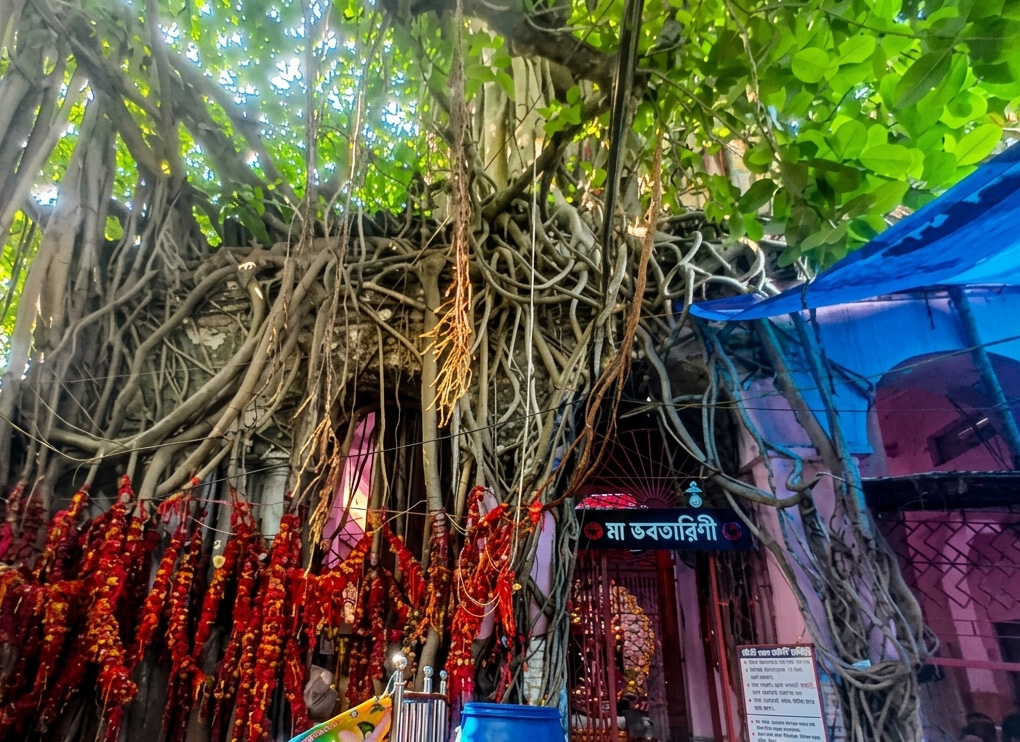
Poramatala Temple
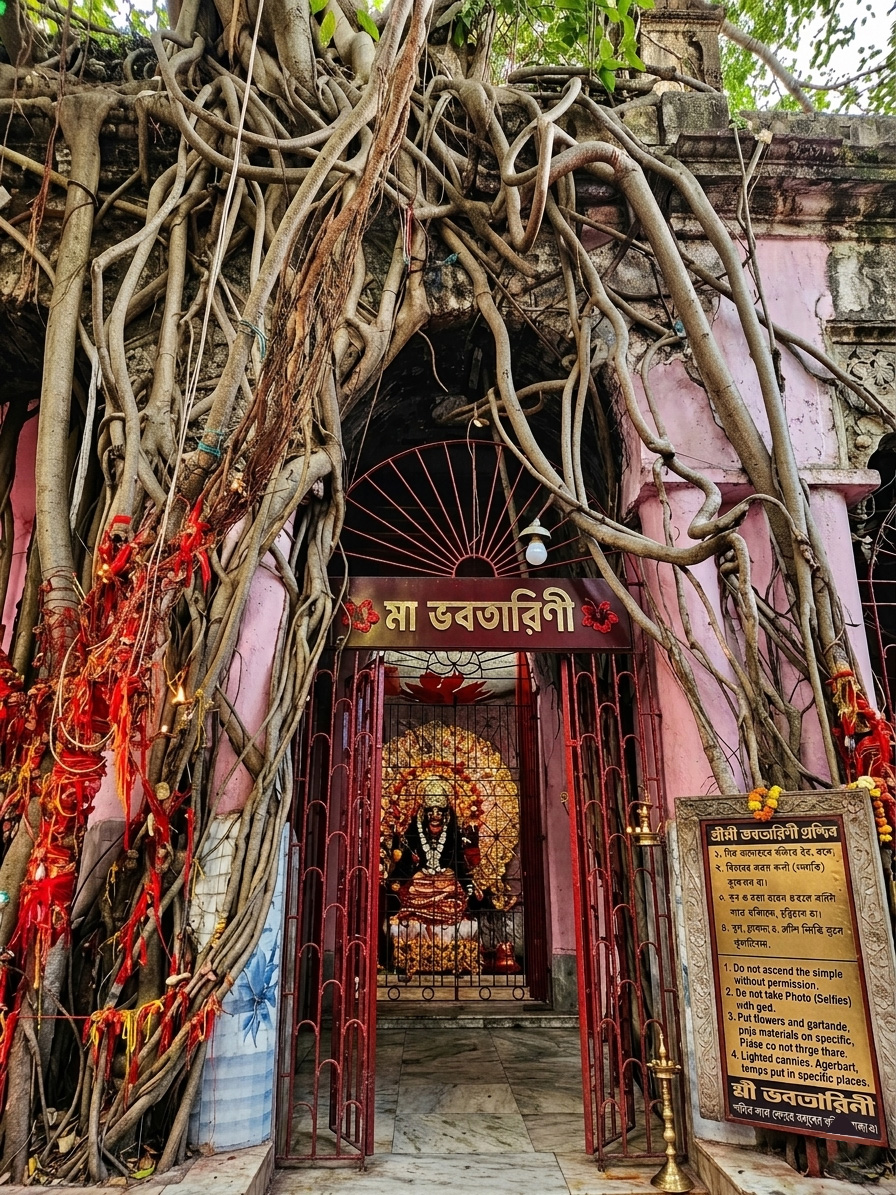
Porama Idol, Nabadwip
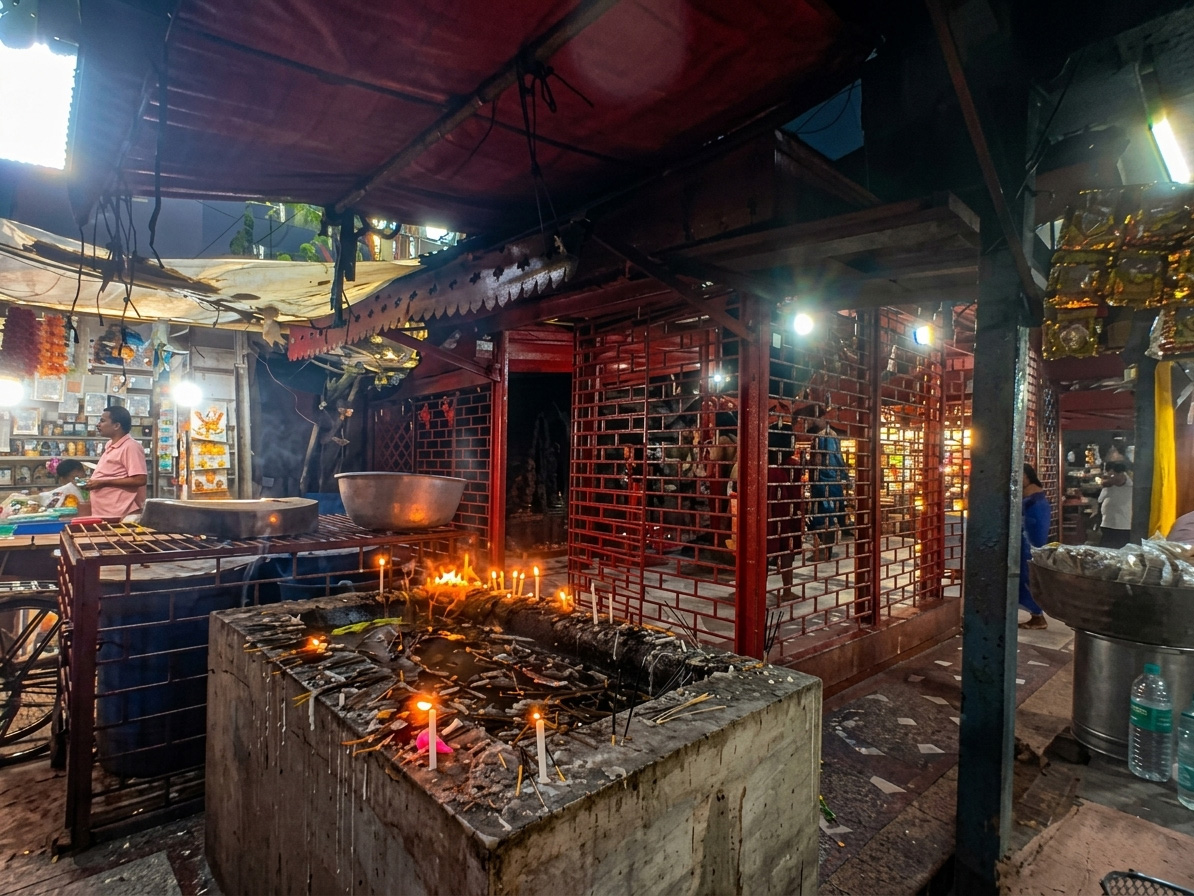
Porama Temple
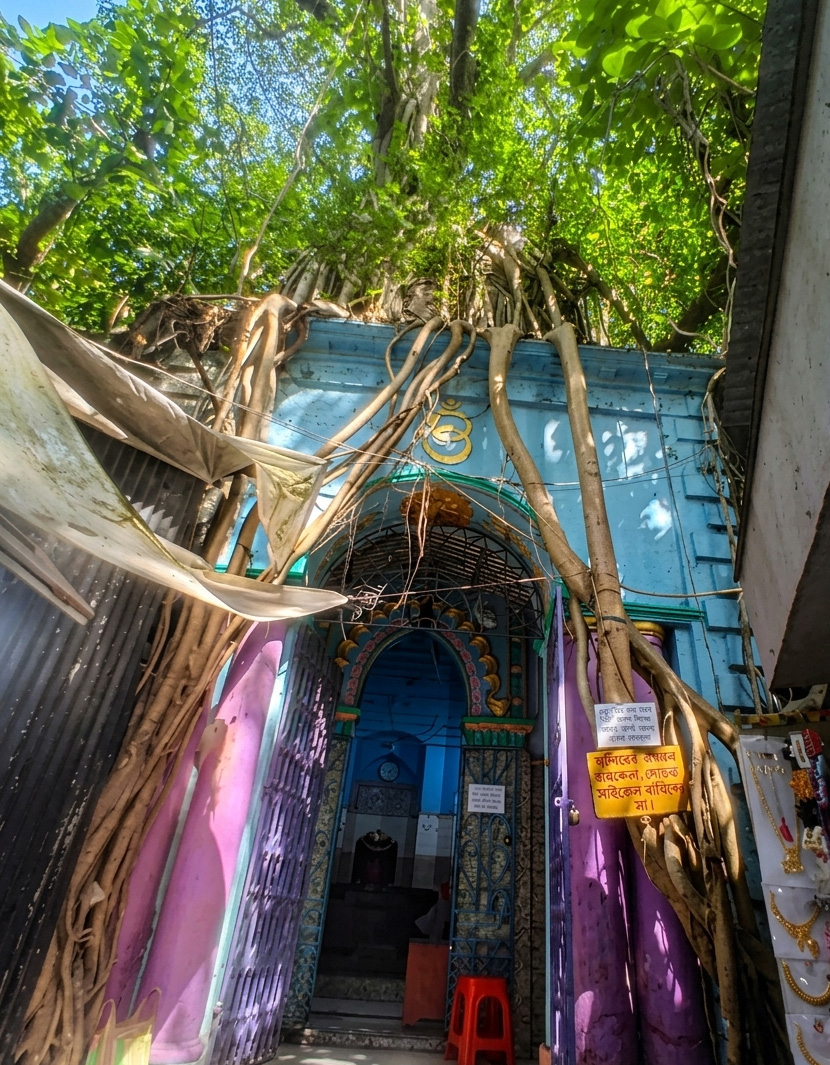
Nabadwip Porama Mandir

KET HIGHLIGHTS
Porama Temple predates the birth of Sri Chaitanya Mahaprabhu. The tree and the temple have become a single entity.
UNIQUE TRADITION
Newly married couples come to the temple to tie a thread praying for a long and stable life.